 IMMERGITY
H-1B to Canada Pathway Finder 2026
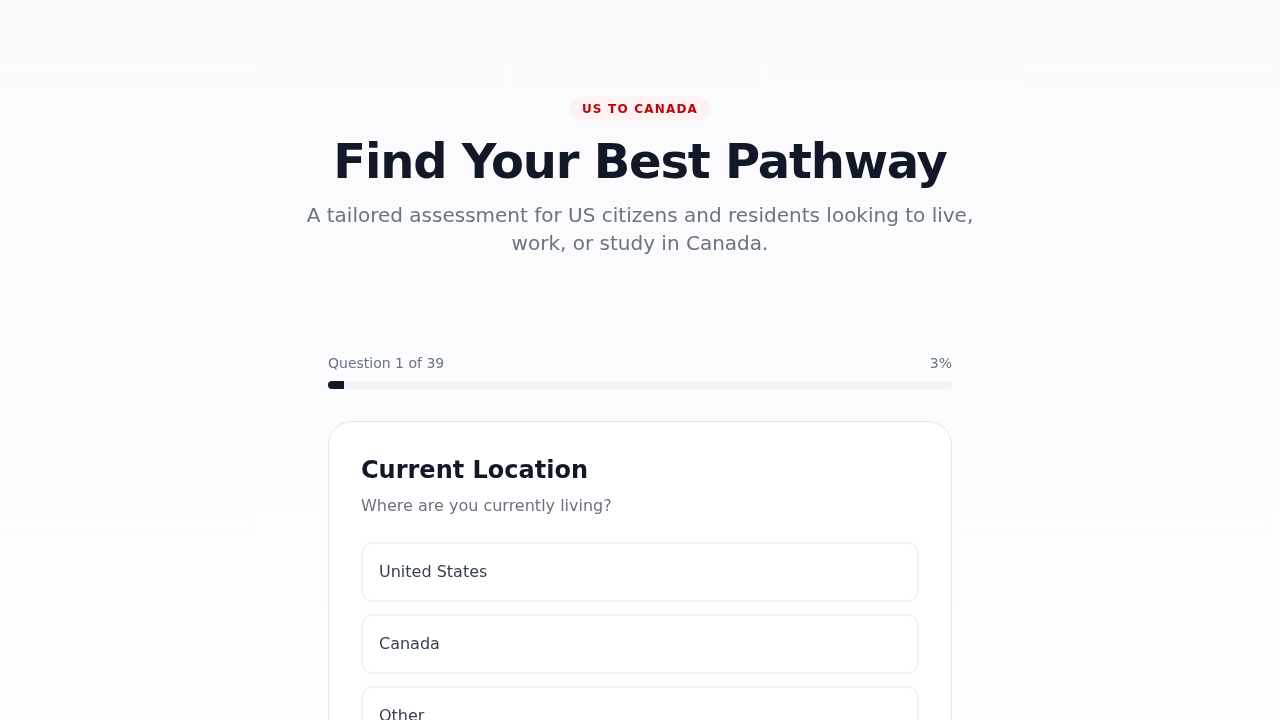
A tailored 39-question assessment for H-1B visa holders, TN workers, US citizens, and green card holders exploring Canadian immigration. Identifies your fastest permanent residence pathway — Express Entry, PNP, CUSMA, or Global Talent Stream.
Find My Canada Pathway →Built by Pranav Bhushan, RCIC (R705848). Free, no sign-up required.
US to Canada Immigration — Pathways Compared
Canada is the top relocation destination for US-based skilled workers in 2026 — driven by H-1B lottery uncertainty, political instability, and Canada's active immigration targets of 395,000 new permanent residents per year. The right pathway depends on your occupation, education, Canadian connections, and timeline.
| Pathway | Best For | Timeline to PR | Canadian Job Required? |
|---|---|---|---|
| Express Entry (FSW) | Overseas applicants with strong education + WE | 6–12 months from ITA | No |
| Express Entry (CEC) | Workers with 1+ yr Canadian work experience | 6 months from ITA | Must have worked in Canada |
| TN Work Permit → CEC | CUSMA-qualifying occupations | 12–18 months total | Yes — Canadian employer |
| Provincial Nominee (PNP) | Specific province targets or low CRS score | 12–24 months total | Often yes (base PNP) |
| Global Talent Stream → CEC | Tech workers hired by Canadian employer | 14–20 months total | Yes — GTS-eligible employer |
| Intra-Company Transfer (ICT) | Multinational employees transferring to Canada | 18–30 months to PR | Yes — same corporate group |
The TN-to-PR Bridge Strategy
The most common pathway for US-based skilled workers in CUSMA-qualifying occupations (engineers, accountants, scientists, computer systems analysts, and 60+ other categories) is the TN work permit bridge. The process: enter Canada on a TN work permit → accumulate one year of NOC TEER 0/1 Canadian work experience → submit a Canadian Experience Class Express Entry profile → receive an ITA and apply for PR.
The TN permit is issued at the port of entry with minimal paperwork for qualifying occupations, making it one of the fastest ways to get into Canada. Total timeline from US to Canadian PR via this route is typically 14–20 months.
| Category | Selected Occupations | Typical Canadian NOC |
|---|---|---|
| Engineering | Civil, mechanical, electrical, chemical, industrial engineers | 213x, 214x series |
| Computer Systems | Computer systems analyst (not all software dev roles) | 21211 |
| Accounting | CPAs, auditors, management accountants | 11100 |
| Science | Biochemists, chemists, biologists, geologists, physicists | 21xx series |
| Healthcare | Dentists, pharmacists, occupational therapists, nurses (RN) | 31xx, 32xx series |
| Legal/Finance | Economists, financial analysts (with relevant degrees) | 11xx series |
CRS Score for US Applicants — What to Expect
Americans typically have strong Express Entry profiles. Native English speakers score CLB 10–12 automatically on language tests. Strong US university degrees (bachelor's, master's, PhD) map to maximum or near-maximum education points. The challenge for most US applicants is accumulating Canadian work experience to access CEC draws, which have historically cut lower than all-program draws.
A typical US applicant profile for CRS estimation: age 28–35, US bachelor's degree (ECA required), NOC TEER 1 occupation, CLB 10 English, no Canadian work experience, no spouse → approximately 430–470 CRS points. Adding one year of Canadian work experience (CEC eligibility) typically adds 40–80 CRS points and opens access to CEC-specific draws. Use the Canada CRS score calculator to model your exact profile.
Find Your Canada Pathway Now
The IMMERGITY H-1B to Canada pathway finder covers 39 questions across occupation, education, language, Canadian connections, and timeline preferences — and outputs your ranked pathways with estimated timelines.
Open Pathway Finder →Then calculate your CRS score at the best CRS calculator Canada.
Frequently Asked Questions
Can H-1B visa holders move to Canada?
Yes. H-1B holders can immigrate to Canada via Express Entry (FSW for overseas applicants or CEC after gaining Canadian experience), Provincial Nominee Programs, or CUSMA work permits for qualifying occupations. Most H-1B holders have strong profiles for Express Entry given their education and NOC TEER 0/1 work history.
What is the fastest pathway from the US to Canadian permanent residence?
Express Entry (FSW or CEC) targets 6 months from ITA to landing — the fastest federal PR stream in the world. For workers not yet in Canada, the TN → CEC bridge adds ~12 months of Canadian work experience before the Express Entry application, making 14–20 months total a realistic timeline.
Does a TN visa help with Canadian permanent residence?
A TN permit itself doesn't lead to PR, but it's the fastest legal entry into Canada for CUSMA-qualifying occupations. Once in Canada on a TN, you can accumulate one year of Canadian work experience and enter the Express Entry pool via CEC — which typically cuts 30–50 points lower than all-program draws.
What Express Entry CRS score can Americans expect?
A 30-year-old American with a bachelor's degree, 3+ years NOC TEER 1 work experience, and native English (CLB 10) scores approximately 440–480 CRS as a single applicant without Canadian experience. Adding one year of Canadian work experience adds ~40–80 points. Use the CRS calculator for your specific profile.
Can I use my US work experience for Canadian Express Entry?
Yes. US work experience in NOC TEER 0, 1, 2, or 3 occupations counts for FSW eligibility and for CRS skill transferability points (foreign WE + language combo). Your US job title must map to a Canadian NOC code — the pathway finder helps you identify the correct match.
Is there a special pathway for US tech workers to immigrate to Canada?
Yes. The Global Talent Stream (GTS) offers 2-week work permit processing for qualifying tech workers hired by eligible Canadian employers. BC PNP and Ontario's tech-focused draws also prioritize tech NOC codes. The GTS → CEC → Express Entry route is the fastest tracked pathway for US software engineers and tech professionals.
Related guide
Express Entry Canada 2026 — Complete CRS Strategy Guide →US-based applicants typically qualify for FSW or CEC. CRS scores, draw strategy, and PNP options explained.